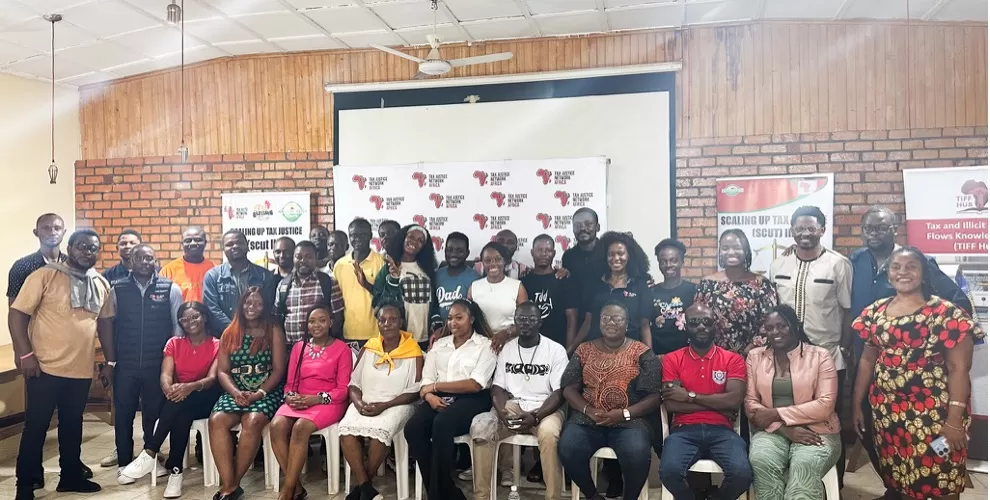
Civil society organisations from across Liberia convened in Monrovia on 4 September 2025, for a strategy dialogue focused on tax justice and illicit financial flows (IFFs).
Organised by Tax Justice Network Africa (TJNA) in partnership with Integrity Watch Liberia (IWL), the meeting brought together governance advocates, policy experts, community leaders, and media representatives to reflect on Liberia’s fiscal challenges and to chart a unified path forward for civil society engagement in public finance reform.
The dialogue was particularly timely, coming in the wake of intense public debate surrounding the renegotiation of the ArcelorMittal Mineral Development Agreement (MDA). The deal, which many argue reduced Liberia’s equity share and lacked transparency, has become a symbol of the broader challenges facing the country in its efforts to secure fair and sustainable revenue from its natural resources.
The strategy dialogue served as a platform for civil society to mobilise, coordinate, and build a shared advocacy agenda. Participants were sensitised on strengthening CSO capacity to analyse fiscal policies, understand the dynamics of IFFs, and advocate for equitable tax systems.
The principles of fair taxation were explored and the differences between progressive and regressive tax systems were examined. Our Senior Policy Officer, Ishmael Zulu, emphasised the role of taxation in shaping the social contract between citizens and the state, highlighting how transparent and equitable tax systems can foster trust, accountability, and inclusive development.
“Africa is estimated to lose over approximately USD 89 billion annually to IFFs, with Liberia alone having lost estimated $966 million through trade mispricing. These losses, often facilitated by multinational corporations through practices such as transfer pricing and tax treaty manipulation, undermine the government’s ability to invest in essential public services like health, education, and infrastructure,” our Senior Policy Officer, Mr. Francis Kairu noted.
It was also highlighted how IFFs exacerbate inequality, weaken governance, and erode the fiscal sovereignty of African nations.
The training emphasised the importance of legal compliance, environmental and social safeguards, and community engagement in contract negotiations. It also provided practical guidance on how CSOs can engage Parliament, demand accountability from government agencies, and mobilise citizens around issues of tax justice.
A highlight of the event was the introduction and training on the Tax and Illicit Financial Flows (TIFF) Knowledge Hub. The TIFF Hub is a digital platform designed to support CSOs, researchers, and policymakers with curated resources, data, and tools for advocacy and learning.
Participants were introduced to the features of the Hub, including access to exclusive reports, training materials, and policy briefs. They were guided through the process of registering as members, navigating the platform, and using its interactive tools to enhance their advocacy work.
The dialogue concluded in a collective commitment to advancing concrete actions aimed at strengthening Liberia’s fiscal governance. Among the agreed priorities was the development of a comprehensive analytical brief on the ArcelorMittal Mineral Development Agreement, which will serve as a foundation for informed advocacy and policy engagement.
TJNA reaffirmed its support by committing to continued collaboration with Liberian civil society actors. The CSOs, in turn, committed to amplifying their voices, providing technical expertise, and advancing regional and global advocacy initiatives that position fair taxation and fiscal transparency as key foundations for human rights and sustainable development.
For more information on TJNA’s work in Liberia contact Francis Kairu at fkairu[@]taxjusticeafrica.net
