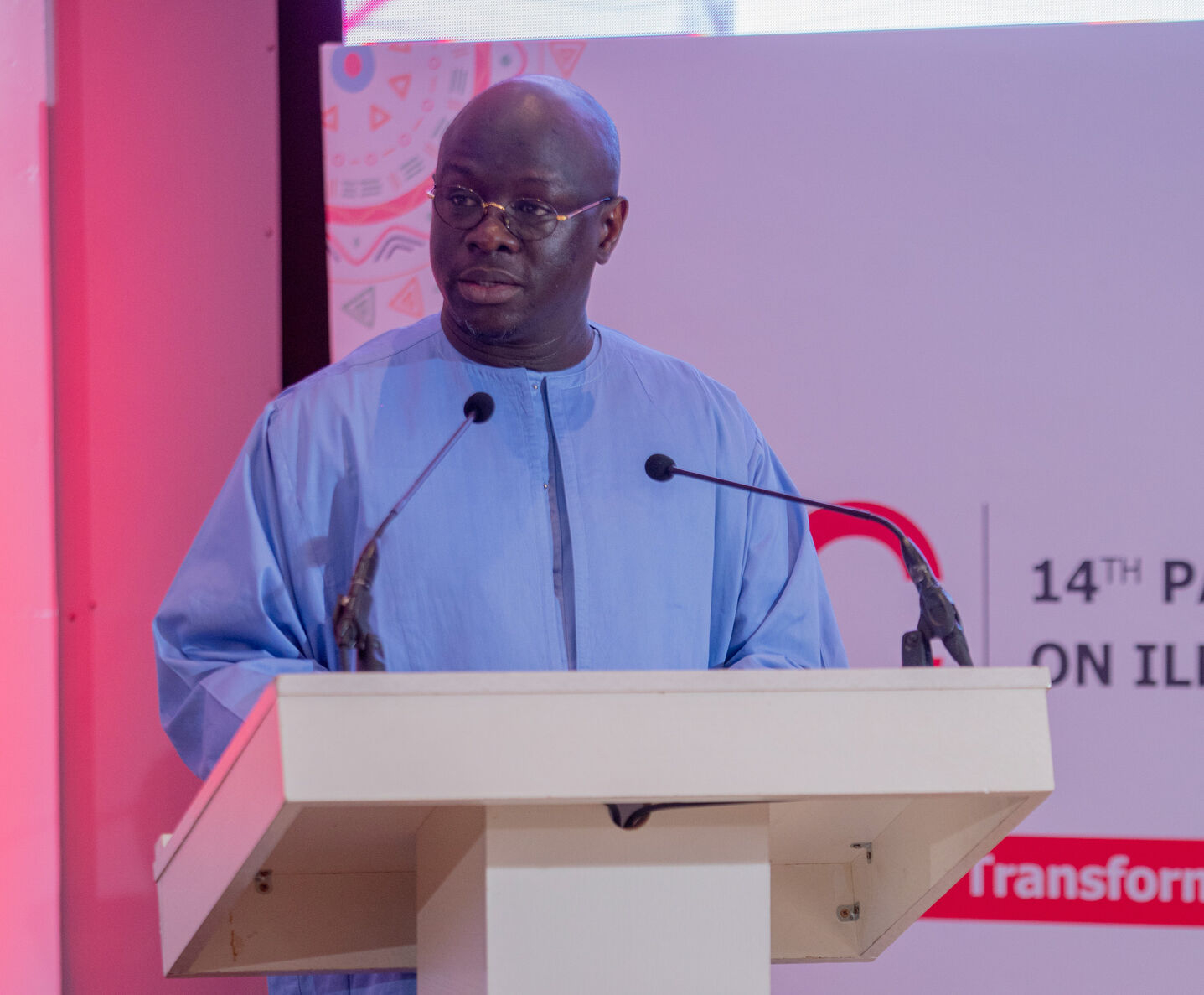
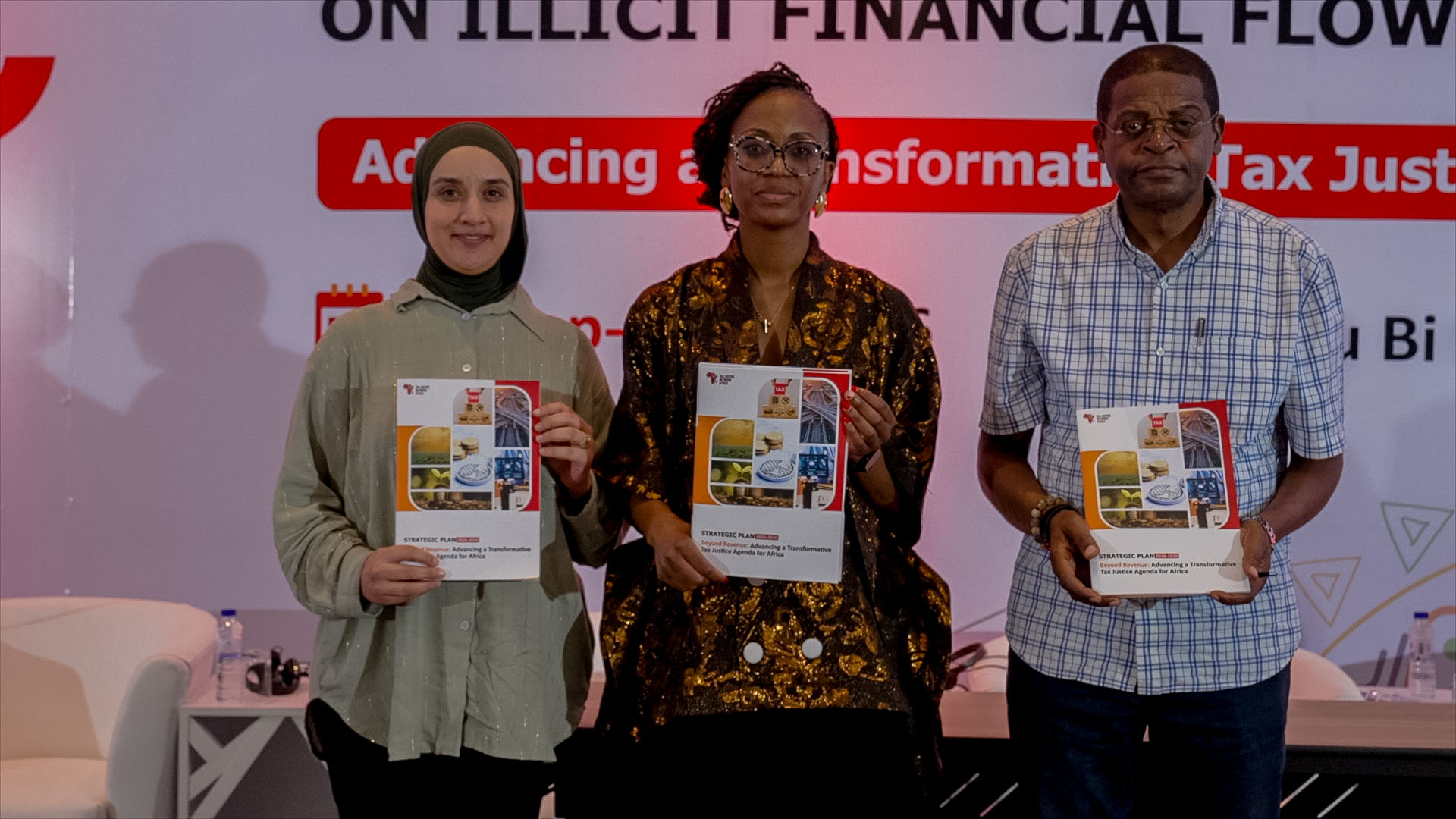
On 16 August 2024, United Nations Member States adopted, by an overwhelming majority, the Draft Terms of Reference (ToRs) for a United Nations Framework Convention on International Tax Cooperation (UNFCITC). This marked a historic turning point in global tax governance, signalling a shift towards a more inclusive, multilateral approach to rule-making in an area that has long been dominated by a limited set of actors.
The adoption of the ToRs was not an isolated event. It followed years of sustained advocacy by developing countries, particularly the Africa Group, aimed at addressing deep structural imbalances in the international tax system. These imbalances have constrained domestic resource mobilisation, facilitated illicit financial flows (IFFs), and limited the ability of African countries to finance their own development priorities.
These questions are also central to the broader Financing for Development (FfD) agenda. The outcome of the Fourth International Conference on Financing for Development in 2025 reaffirmed the importance of strengthening international tax cooperation, with an emphasis on building a more inclusive and effective global tax system—thereby further reinforcing the momentum behind the UNFCITC process. As the Financing for Development Forum convenes from 20–24 April 2026, these debates continue to shape how Africa positions itself in ongoing efforts to reform the global financial architecture. This blog series is situated within that moment.
It seeks to introduce the UNFCITC process to new audiences and to unpack the key concepts that African negotiators, and those supporting them should consider as negotiations unfold. At the same time, meaningful engagement from a broader set of stakeholders, including academia and civil society, will be critical to shaping the outcomes of this process.
In this spirit, Tax Justice Network Africa (TJNA) is establishing a platform to amplify African voices and perspectives within the UNFCITC negotiations. Through a series of written, analytical, and policy-oriented opinion pieces, this platform will interrogate the technical issues under discussion and contribute to a more informed and grounded discourse. At a time when global attention is focused on financing for development, ensuring that African perspectives shape these debates is more important than ever.
From Illicit Financial Flows to Global Tax Reform
The roots of the UNFCITC can be traced back at least a decade. In 2015, the High-Level Panel on Illicit Financial Flows from Africa, chaired by former South African President Thabo Mbeki, highlighted the scale and systemic nature of IFFs draining resources from the continent. The Panel underscored that these flows were not merely technical issues, but structural challenges embedded in the global economic system.
Crucially, the Panel called for stronger global coordination and explicitly recommended that the United Nations play a more prominent role in addressing IFFs. It also argued for a unified global policy instrument to provide coherence and legitimacy to international efforts.
This call was reinforced in subsequent global processes, including the Third International Conference on Financing for Development in Addis Ababa. While the Addis Ababa Action Agenda recognised the importance of tackling tax avoidance and enhancing inclusivity, it stopped short of establishing a binding multilateral framework. The gap between ambition and institutional reality remained.
The Limits of the Current System
Today’s international tax architecture is largely shaped by the Organisation for Economic Co-operation and Development (OECD), supported by institutions such as the G20, the International Monetary Fund (IMF), and the World Bank. While the OECD has played a central role in developing norms and standards, its processes have long been criticised for insufficient inclusivity.
Efforts to broaden participation, such as the OECD Inclusive Framework established in 2016, have increased the number of participating countries. However, participation has not necessarily translated into meaningful influence. Many developing countries argue that they remain structurally disadvantaged in agenda-setting, technical capacity, and decision-making dynamics.
These concerns were formally acknowledged in the 2023 report of the UN Secretary-General on international tax cooperation. The report concluded that existing frameworks often fail to reflect the priorities of developing countries and, in some cases, impose standards that are difficult to implement given capacity constraints. It also highlighted procedural issues, noting that “consensus” decision-making may mask unequal participation when countries lack the resources to engage fully.
The Africa Group’s Intervention
Against this backdrop, the Africa Group, led by Nigeria, initiated a decisive intervention. In 2022, it successfully advanced UN General Assembly Resolution 77/244, which called for a comprehensive assessment of international tax cooperation and options for reform.
The Secretary-General’s subsequent report outlined three pathways: a multilateral convention, a framework convention, or a strengthened UN-led process. The Africa Group championed the second option, a framework convention, arguing that it would offer both flexibility and a foundation for future protocols.
This proposal was adopted with strong support from developing countries and notable backing from a significant number of OECD Inclusive Framework members, signalling a broader shift in global sentiment. The adoption of Resolution 78/230 and, later, the ToRs in 2024, formalised this trajectory and established a Member State-led process to negotiate the convention.
What Is the UN Framework Convention?
At its core, the UNFCITC is intended to establish a new global architecture for tax cooperation. Unlike existing arrangements, it is explicitly designed to be universal, inclusive, and grounded in intergovernmental decision-making.
The adopted Terms of Reference outline three overarching objectives:
- To create fully inclusive and effective international tax cooperation, both substantively and procedurally;
- To establish a governance system capable of responding to current and future tax challenges;
- To develop a fair, transparent, efficient, and equitable international tax system that supports sustainable development and strengthens domestic resource mobilisation.
However, the Convention itself is only one part of the architecture. It is being negotiated alongside two early protocols, which will contain more detailed and operational rules, namely:
- Protocol 1: Taxation of income derived from cross-border services in an increasingly digitalised and globalised economy;
- Protocol 2: Prevention and resolution of tax disputes.
The second protocol was formally selected during the organisational phase of the negotiations in 2025 and is now being actively developed under a dedicated workstream.
What Does the Africa Group Want to Achieve?
A central question in this process is what the Africa Group, and, more broadly, developing countries, seek to achieve through the UNFCITC. Two interrelated priorities emerge from the historical context. The first is inclusivity. For African countries, meaningful participation in rule-making is not an end in itself but a means to ensure that global tax rules reflect their economic realities. This includes addressing longstanding issues such as the allocation of taxing rights, the effective taxation of multinational enterprises, and the challenges posed by digitalisation.
The second is effectiveness. Despite decades of reform, challenges such as base erosion and profit shifting (BEPS) and illicit financial flows persist—and in some cases have intensified. The Africa Group’s position is that a more inclusive system will also be more effective , capable of producing rules that are both implementable and aligned with development priorities. In this sense, the UNFCITC is not just about governance reform; it is about reclaiming policy space to address these persistent challenges.
What’s next in the UNFCITC process?
The Intergovernmental Negotiating Committee on the United Nations Framework Convention on International Tax Cooperation will continue to meet through 2026–2027 to develop the Framework Convention and its two early protocols. Negotiations are structured across three workstreams:
- Workstream 1: The Framework Convention;
- Workstream 2: Protocol 1 on cross-border services in an increasingly digitalised and globalised economy;
- Workstream 3: Protocol 2 on dispute prevention and resolution.
These negotiations are already engaging with complex substantive issues, including taxing rights, administrative cooperation, tax dispute mechanisms, and the broader architecture of global tax governance.
Setting the Stage for This Series
This blog series is designed to support African engagement in this process. It will unpack key concepts, debates, and strategic choices that will shape the outcome of the UNFCITC. It will also situate these negotiations within a broader global context, marked by shifting power dynamics and what can increasingly be described as a rupture in the international order. This moment presents both risks and opportunities for Africa. The UNFCITC offers a rare opportunity to reshape the rules of global tax governance. But outcomes will not be determined by process alone; they will depend on how effectively countries define their priorities, build alliances, and negotiate.
The question now is not whether reform is possible. It is what kind of reform will emerge, and whether it will meaningfully respond to the structural challenges that African countries have long sought to address within the international tax architecture. As global attention turns to the Financing for Development agenda, this series aims to ensure that African priorities on international tax cooperation are not only heard but also help shape the direction of reform.
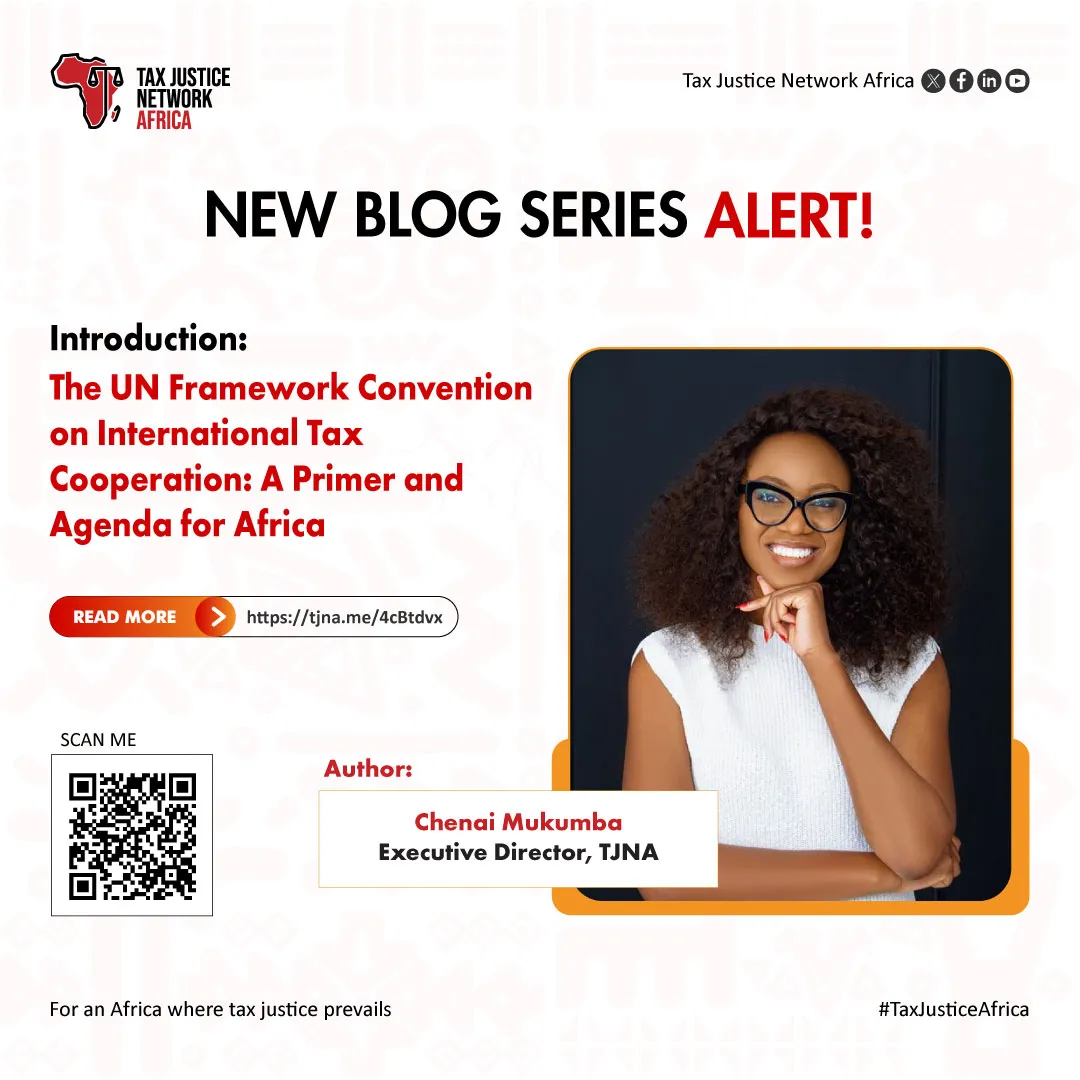
This introductory piece is authored by TJNA’s Executive Director, Ms. Chenai Mukumba.
For more information, please contact Everlyn Muendo at emuendo[@]taxjusticeafrica.net.
