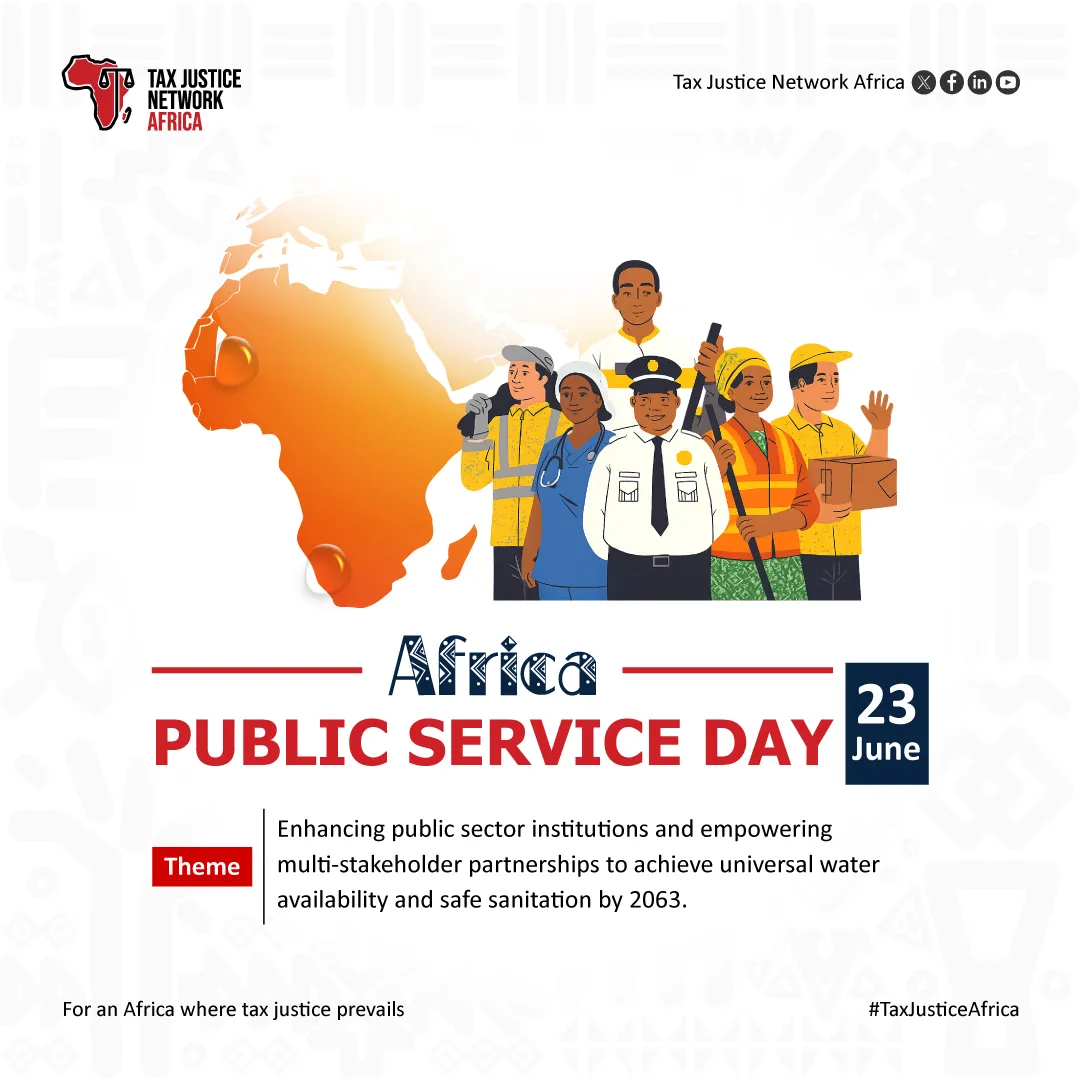
Africa Public Service Day, observed annually on 23 June, reminds us of the role of public institutions and civil servants in advancing inclusive and sustainable development across the continent. It is also a moment to reflect on progress made and the urgent actions required to strengthen governance systems that deliver essential services for all.
The 2026 theme, “Enhancing Public Sector Institutions and Empowering Multi-Stakeholder Partnerships to Achieve Universal Water Availability and Safe Sanitation by 2063,” highlights the need to build capable, accountable, and inclusive public institutions while fostering collaboration among governments, civil society, the private sector, and citizens. Water and sanitation are not only basic human rights but also a foundational pillar of public health, economic resilience, and social equity.
Tax Justice Network Africa (TJNA) joins civil society, governments, and intergovernmental bodies across the continent to commemorate Africa Public Service Day 2026.
At TJNA, we recognise that achieving universal access to water and sanitation requires more than technical solutions; it demands strong public institutions, equitable financing systems, and transparent resource management. Domestic resource mobilisation, anchored in progressive and fair taxation, remains central to financing the infrastructure and services needed to close persistent gaps in water and sanitation access.
"Strong public institutions are built on trust, accountability, and sustainable financing. Achieving universal access to water and safe sanitation requires more than infrastructure—it demands fair tax systems, transparent management of public resources, and partnerships that place citizens at the centre of development. Tax justice is therefore an essential foundation for delivering quality public services and achieving Agenda 2063,” says TJNA’s Senior Policy Officer, Mr Ishmael Zulu.
Across many African countries, public systems continue to face structural challenges, including underinvestment, inefficiencies, and illicit financial flows that drain critical resources. These challenges undermine governments' capacity to deliver essential public goods, including clean water and safe sanitation.
TJNA continues to advocate policy reforms that strengthen domestic resource mobilisation, combat illicit financial flows, promote transparency in public finance, and advance inclusive global tax governance. Through evidence-based research, strategic advocacy, capacity building, and regional collaboration, we work to ensure that African countries retain more of their own resources to finance sustainable development priorities, including universal access to water and sanitation.
Collaboration among governments, civil society organisations, communities, and the private sector is vital for scaling solutions, strengthening accountability, and ensuring inclusive, responsive service delivery for all citizens. Civil society, in particular, plays a crucial role in promoting transparency, amplifying citizen voices, and holding institutions accountable for equitable service provision.
As Africa marks Public Service Day 2026, TJNA reaffirms its commitment to advancing tax justice, equitable public finance systems, and accountable governance, all key enablers of sustainable development. Strengthening public institutions and fostering inclusive partnerships will be essential to ensuring that no one is left behind in accessing basic services.
TJNA calls on African governments and stakeholders to prioritise reforms to improve public financial management, curb illicit financial flows, and promote participatory governance. Investing in transparent and accountable systems will not only strengthen public trust but also unlock the resources needed to achieve universal access to water and safe sanitation by 2063.
TJNA, together with its partners, is committed to a prosperous, resilient, and self-sustaining Africa in which the continent’s wealth works for Africans.
For more information about the SCUT Project, please contact Ishmael Zulu at izulu(@)taxjusticeafrica.net.
